Why Energy Efficiency Matters in Desert Climate Cooling
Living in Maricopa County means facing some of the most intense cooling demands in the nation. With summer temperatures regularly exceeding 115°F and a cooling season that stretches from April through November—nine months of relentless heat—your HVAC system works harder here than almost anywhere else in the country. This extended operational period creates both a challenge and an opportunity: the harder your system runs, the more critical it becomes to verify it operates at peak efficiency. We serve Maricopa County residents who understand that an inefficient cooling system doesn't just waste energy—it drains your wallet month after month. A professional HVAC inspection identifies hidden inefficiencies that quietly drive up utility bills, often by 20-30% or more when systems operate poorly. Modern Phoenix utility rates average $0.14-$0.18 per kilowatt-hour, meaning an inefficient system can cost an extra $50-$100 monthly during peak summer months.
What a Professional HVAC Inspection Reveals About Efficiency
When we perform a thorough HVAC inspection, our technicians measure exactly how well your system performs. We conduct temperature differential testing, comparing the temperature of cooled air leaving your vents against the temperature returning to the system—a properly functioning unit should show a 15-20°F difference. We verify refrigerant levels using precision gauges on both the high and low sides of the system, because improper refrigerant charge cuts efficiency by 10-15%. Our team measures static pressure throughout your ductwork using specialized equipment to identify restrictions that force your blower motor to work harder. We test superheat and subcooling values to confirm your compressor operates in its ideal range. We also inspect your evaporator and condenser coils for dust and mineral buildup—common in Maricopa County's hard water environments and dusty desert conditions—because even light coating reduces heat transfer efficiency by 5-10%. Each of these measurements tells the story of whether your system is costing you money or performing efficiently.
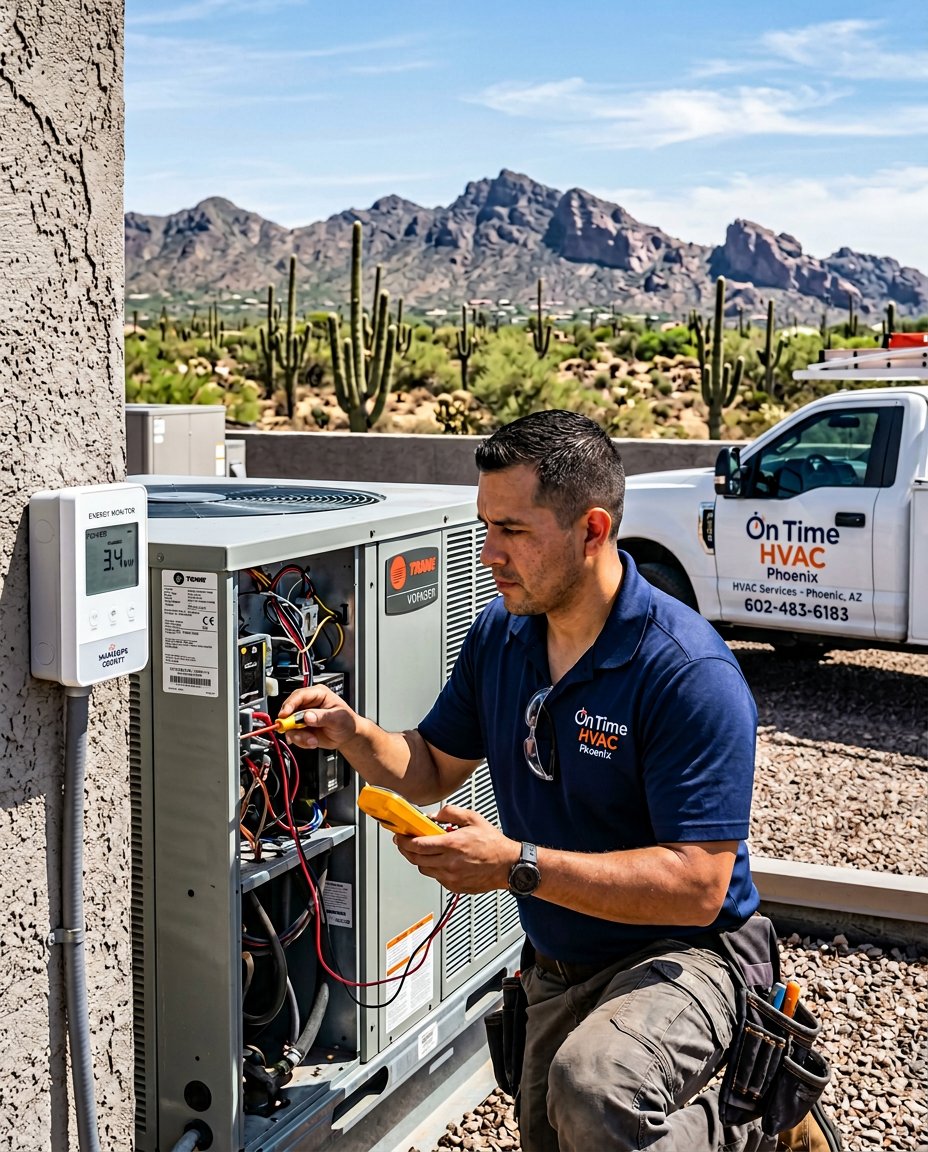 Phoenix HVAC inspection service at 26 E Pima St identifying energy efficiency issues
 SEER2 Ratings and Modern Efficiency Standards
If your HVAC system is older than five years, it likely carries an outdated SEER rating. The industry switched to SEER2 ratings in January 2023, which reflects real-world conditions more accurately than the previous SEER standard. For Maricopa County's Southwest region, the minimum SEER2 rating for new split systems is 14.3—units from 2015 and earlier typically rated only 10-13 SEER, meaning they're 20-30% less efficient by today's standards. A modern high-efficiency system with SEER2 ratings of 18-22 uses dramatically less electricity than aging equipment. We provide HVAC inspection in Maricopa County that helps you understand whether your current system justifies replacement or simply needs service. Replacing a 10 SEER unit with a 20 SEER system can save $30-$50 monthly in cooling costs, paying for itself within 5-7 years while improving comfort and reliability.
Smart Thermostat Integration and Control Efficiency
Your thermostat controls when your system runs, making it one of the highest-impact efficiency tools available. Many homeowners still use manual or basic programmable thermostats that cycle systems on and off at fixed times, wasting energy during the day when no one's home or at night when outdoor temperatures drop. Smart thermostats like Nest, Ecobee, and Honeywell Home learn your schedule, adjust for weather changes automatically, and can be controlled remotely from your phone. A professional HVAC inspection includes thermostat calibration checks to verify accurate temperature readings—even a 2°F error wastes energy all season. When paired with a modern, efficient HVAC system, smart thermostats reduce cooling costs by an additional 10-15% beyond the system's base efficiency. We've served Maricopa County homeowners since 2014, and we've watched smart home technology transform energy management. Integrating a quality smart thermostat during or after your inspection means you're not just installing an efficient system—you're actively managing and improving its operation every single day.
Ductwork Efficiency and Air Leakage Prevention
Even the most efficient HVAC system fails to deliver savings if your ductwork leaks conditioned air into attics, crawlspaces, or unconditioned areas. Studies show that ductwork leakage wastes 20-30% of your system's output in typical homes—and desert homes with attic temperatures exceeding 140°F in summer experience even worse losses. Our inspections include static pressure testing and, when needed, smoke tests or duct blaster measurements to locate air leaks throughout your system. We verify that your ductwork isn't undersized, which forces your blower motor to work harder and reduces airflow below the 400 cubic feet per minute required per ton of cooling capacity. Sealing ductwork leaks with mastic sealant and insulating exposed ducts in hot attic spaces can improve overall system efficiency by 15-20%.
What Is Included in an HVAC Inspection?
We understand homeowners want to know exactly what happens during an inspection. Our team performs refrigerant charge verification, electrical connection testing, capacitor evaluation, filter assessment, coil cleanliness inspection, airflow measurement, https://alexisxxwb297.tearosediner.net/24-7-emergency-hvac-response-in-alhambra-professional-service-when-it-matters and thermostat calibration. We check for refrigerant leaks, measure voltage and amperage on electrical components, inspect indoor and outdoor coils for buildup, test ductwork for leaks, and verify that your system delivers the correct temperature differential across the evaporator coil. Located near The Phoenix Police Museum in downtown Phoenix, we conduct these inspections systematically so you receive a complete picture of your system's health and efficiency status. Each inspection typically takes 1-2 hours and results in a detailed report showing exactly what we found and what we recommend for maximum efficiency.
Maintenance Plans That Protect Your Investment
An HVAC inspection is a single snapshot in time, but true energy efficiency requires ongoing care. We recommend annual professional tune-ups before the cooling season begins—ideally in March or April. These maintenance visits include filter changes, coil cleaning, capacitor inspection, electrical connection verification, and lubrication of moving parts. In Maricopa County's dusty environment, condenser coils accumulate mineral deposits and desert dust quickly, reducing efficiency month by month if not professionally cleaned annually. Homeowners should change filters every 30-90 days, more frequently during peak cooling season when dust storms strike the region. We also recommend clearing condensate drain lines to prevent water damage and verify thermostat calibration. Annual maintenance plans from us typically cost $150-$300 but prevent efficiency losses that would cost hundreds more in wasted energy.
Rebates, Incentives, and Long-Term Savings
The upfront cost of replacing an old HVAC system with high-efficiency equipment ranges from $4,000-$12,000 depending on tonnage and SEER2 rating, but federal tax credits, utility rebates, and energy savings create compelling economics. The federal government offers tax credits for qualified ENERGY STAR systems, and Phoenix-area utilities including Arizona Public Service frequently offer rebates of $500-$2,000 for efficient equipment installation. Over a 15-year system lifespan, upgrading from a 10 SEER to a 20 SEER system in a Maricopa County home saves $12,000-$18,000 in electricity costs—far exceeding the installation premium. We help Maricopa County homeowners determine whether their current system justifies replacement or can be restored to efficiency through cleaning and repair. Our technicians provide honest assessments backed by five-star reviews, explaining the true cost-benefit comparison so you make informed decisions about your cooling investment.
Schedule Your Inspection Today
Professional inspection prevents refrigerant leaks that reduce cooling by 5-10% monthly, prevents compressor failure from low refrigerant charge, prevents electrical component failures from loose connections, and prevents efficiency loss from dirty coils and clogged filters. The diagnostic fee of $75-$150 pays for itself quickly when you discover $50-$100 in monthly waste hiding undetected. We combine professional expertise with fair pricing and honest work—we explain everything clearly so you understand exactly what your system needs. Located at 26 E Pima St, Phoenix, AZ 85003, we're available 24/7. Call us at 602-483-6183 to schedule your inspection today, or visit https://ontimehvacphoenix.com/ to learn more about how we help Maricopa County homeowners reduce cooling costs while improving comfort and reliability.
Visit 602-483-6183 for HVAC inspection services in Phoenix, AZ "@context": "https://schema.org", "@type": "LocalBusiness", "name": "On Time HVAC Phoenix", "telephone": "602-483-6183", "address": "@type": "PostalAddress", "streetAddress": "26 E Pima St", "addressLocality": "Phoenix", "addressRegion": "AZ", "postalCode": "85003" , "url": "https://ontimehvacphoenix.com/", "areaServed": "Maricopa County", "description": "Professional HVAC Inspection serving Maricopa County in Phoenix, AZ.", "sameAs": ["https://www.facebook.com/OnTimeHVACPho/","https://www.instagram.com/ontimehvacpho/","https://www.youtube.com/@OnTimeHVACPho","https://www.linkedin.com/company/ontimehvacpho/","https://x.com/OnTimeHVACPho","https://www.tiktok.com/@ontimehvacpho","https://www.pinterest.com/OnTimeHVACPho/"], "image": "@type": "ImageObject", "url": "https://lh3.googleusercontent.com/d/1O7jaShmcuRPJkuYPeScley4G33xh_str", "name": "Professional HVAC Inspection in Maricopa County: Reduce Energy Costs Service Image", "description": "Image for: What is included in an HVAC inspection?", "encodingFormat": "image/png" , "audio": "@type": "AudioObject", "contentUrl": "https://drive.google.com/file/d/19hm9N6-YVeaoExwoP8Lzp6c2REF2q-GO/view", "name": "Professional HVAC Inspection in Maricopa County: Reduce Energy Costs Expert Audio", "description": "Audio answer to: What is included in an HVAC inspection?", "encodingFormat": "audio/wav"