Understanding What Your Homeowner's Insurance Covers
When your air conditioning system fails during a Phoenix summer, the first question many homeowners ask is whether their insurance will cover the repair costs. The answer depends on how the damage occurred and what your specific policy includes. Most standard homeowner's insurance policies cover sudden and accidental damage to your HVAC system, but they typically exclude coverage for normal wear and tear or lack of maintenance. Downtown Phoenix residents should review their policies carefully to understand the distinction between covered events and excluded scenarios. If a lightning strike damages your condenser unit or a sudden refrigerant leak occurs due to a manufacturing defect, your insurer may cover repairs. However, if your system fails because you haven't changed the air filter in eighteen months, that damage likely falls under the exclusion for maintenance neglect. On Time HVAC Phoenix has worked with countless homeowners navigating these insurance questions, and we always recommend having a clear conversation with your insurance agent before an emergency occurs. Understanding your coverage now can save you thousands of dollars when a crisis strikes.
What Voids Your HVAC Coverage
Insurance companies maintain specific exclusions that void HVAC repair coverage, and knowing these boundaries protects your claim approval rates. Lack of preventive maintenance is the most common reason claims get denied. If your system breaks down and inspection reveals a clogged filter, neglected annual tune-ups, or mineral buildup from never cleaning the condenser coils, your insurer will likely deny the claim entirely. The desert conditions around Downtown Phoenix make regular maintenance especially critical—dust storms and hard water accelerate equipment degradation. DIY repair attempts that cause further damage also void coverage. We've encountered situations where homeowners tried to recharge refrigerant themselves or replaced components improperly, then their insurance denied claims because the damage resulted from unprofessional work. On Time HVAC Phoenix recommends always using licensed, EPA-certified technicians for any repair work to preserve your coverage eligibility. Additionally, coverage may be voided if you failed to disclose known system problems when filing your insurance application or if you knowingly operated a system you knew was damaged.
Sudden vs. Gradual Damage: The Critical Difference
Insurance adjusters make a crucial distinction between sudden damage and gradual deterioration, and this distinction determines whether your claim pays out. Sudden damage occurs without warning—a lightning strike, an unexpected component failure, or accidental physical impact. Your refrigerant line ruptures overnight, your compressor seizes, or a power surge fries your electrical connections. These events typically qualify for coverage because they couldn't have been prevented through normal maintenance. Gradual damage develops over months or years through neglect or normal aging. When an adjuster investigates, they examine maintenance records, service history, and the system's age. If they find no evidence of annual professional inspections or filter changes, they'll likely classify even seemingly sudden failures as gradual damage resulting from negligence. On Time HVAC Phoenix helps homeowners establish clear maintenance documentation by providing detailed service reports and recommendations after every visit. This documentation becomes invaluable evidence when filing insurance claims.
How to File an HVAC Claim Successfully
Filing an insurance claim for HVAC damage requires careful documentation and precise timing to maximize approval odds. First, contact your insurance company immediately after discovering the problem—don't delay, as timely reporting demonstrates the damage was sudden rather than something you ignored for months. Document the damage with photographs and video before attempting any repairs or cleanup. Take pictures of the failed equipment, the area surrounding it, and any visible damage like burned-out components or water damage from leaks. Next, obtain a detailed assessment from a licensed HVAC technician. This professional inspection should include written documentation of what failed, why it failed, and repair cost estimates. On Time HVAC Phoenix provides thorough diagnostic reports that insurance adjusters respect because our reports include technical specifics about the failure—not vague descriptions. When you submit your claim, include the professional inspection report, your maintenance records, photographs, and a description of when and how you discovered the problem. Be specific about dates and circumstances. Your insurance company will likely send an adjuster to inspect the system themselves; cooperate fully and provide access to all records. Never exaggerate the damage or misrepresent what happened, as fraud investigation will void your entire policy. Honest, documented claims processed by professional technicians succeed at significantly higher rates than claims lacking proper evidence.
Working with Insurance Adjusters and Technicians
The relationship between homeowners, insurance adjusters, and HVAC technicians directly impacts claim outcomes. When your adjuster arrives to inspect the system, verify your HVAC contractor is present to discuss technical details. Adjusters appreciate when they can speak directly with certified technicians who can explain exactly what failed and why. On Time HVAC Phoenix often accompanies homeowners during adjuster inspections in Downtown Phoenix, providing professional perspective that clarifies technical issues for non-technical insurance representatives. Before authorizing repairs, confirm with your insurance company whether they'll approve the specific contractor you've chosen. Some policies require you to use their preferred vendors, while others allow you to select any licensed professional. Never start repairs before receiving claim approval, as unauthorized work may void your coverage. If your insurance company denies the claim, you have the right to request a detailed written explanation and the right to appeal. Professional documentation from your HVAC technician becomes crucial in appeals.
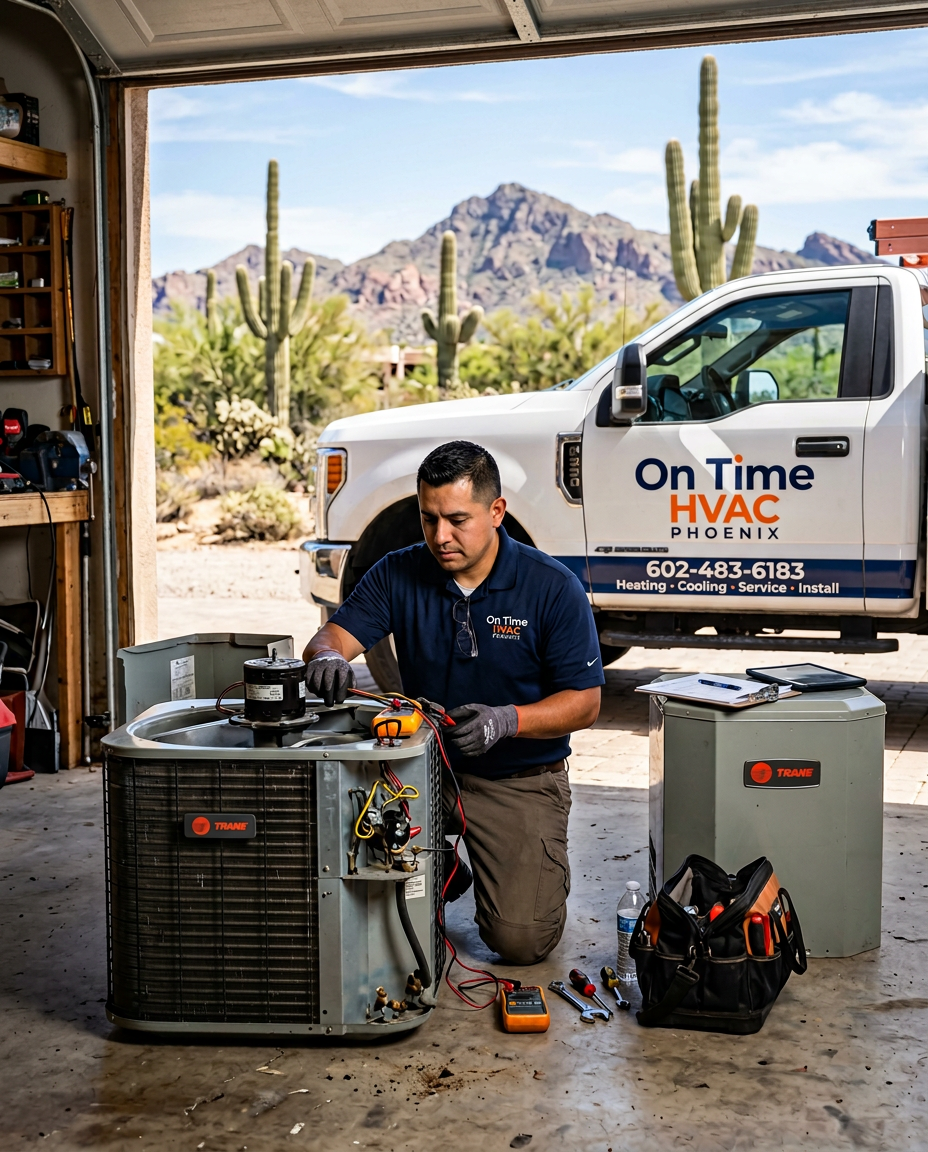 26 E Pima St HVAC Repair service addressing common system failures
 The Most Common HVAC Problem and Insurance Coverage
Across Downtown Phoenix and the greater Phoenix area, we see predictable patterns in HVAC failures. The most common HVAC problem is capacitor failure, accounting for roughly thirty percent of service calls. Capacitors store electrical energy that starts the compressor and fan motors; when they fail, your system won't start at all. Most capacitor failures result from power surges, age-related wear, or manufacturing defects—conditions that usually qualify for insurance coverage. Refrigerant leaks rank second in frequency. Some refrigerant failures are sudden and covered; others result from low refrigerant or inadequate maintenance and get denied. Compressor failure, the most expensive problem, occurs when the compressor—your system's heart—burns out or seizes. Air filter restrictions and frozen evaporator coils represent preventable problems that insurers almost never cover because they result directly from maintenance neglect. On Time HVAC Phoenix serves Downtown Phoenix residents with fast, professional diagnostics that clarify exactly what failed and why, providing the documentation your insurance company requires to process your claim fairly.
Documentation That Maximizes Claim Success
Insurance claim approval hinges entirely https://reidwhmp589.theglensecret.com/diy-hvac-maintenance-vs-professional-service-what-encanto-village-homeowners-should-know on documentation quality, and homeowners who maintain detailed records achieve approval rates exceeding eighty percent. Start by keeping copies of your annual maintenance agreements and service reports from professional HVAC contractors. Each report should document what was inspected, what components were cleaned or replaced, refrigerant levels, electrical connections verified, and filter condition. These records prove you maintained your system according to manufacturer recommendations, which strengthens any future claim. Photograph your system quarterly—exterior condenser unit, interior air handler, thermostat, and any visible components. Keep all receipts for repairs, maintenance visits, and component replacements. Maintain a simple log documenting when you changed air filters, noting the MERV rating and condition of the old filter. Save your utility bills, as sudden increases in energy consumption often signal developing problems and demonstrate you actively monitor your system. When problems occur, photograph them immediately before repairs begin. If you smell burning, hear unusual noises, or see water damage, document it with photos and video. Write a detailed description of what you noticed, when you discovered it, and what you did in response.
Protecting Your HVAC System to Preserve Coverage
The best insurance strategy is preventing problems before they occur, which requires consistent preventive maintenance and operational discipline. Schedule professional HVAC inspections every spring before the cooling season begins—this is critical in Phoenix's extreme heat environment. Change your air filter every thirty days during peak cooling season; desert dust accumulation is severe in Downtown Phoenix and surrounding areas near landmarks like Taste It Tours -Food Tours Phoenix. Keep your outdoor condenser unit clear of vegetation, confirming at least two feet of clearance on all sides to prevent debris clogging. Clean the exterior coils annually to remove dust, pollen, and mineral deposits. Monitor your thermostat and electrical panel for signs of problems. If you hear unusual grinding, clicking, or squealing noises, call immediately rather than waiting for complete failure. Avoid running your system with windows open or doors frequently opening and closing—this forces your system to work harder and degrades components faster. On Time HVAC Phoenix provides detailed maintenance plans and professional service that keeps your system protected and your insurance coverage intact. Backed by 5-star Google reviews and twelve years of service to Downtown Phoenix residents, our approach to preventive care has helped homeowners avoid costly damage and insurance claim denials.
Call 602-483-6183 for Downtown Phoenix HVAC Repair services "@context": "https://schema.org", "@type": "LocalBusiness", "name": "On Time HVAC Phoenix", "telephone": "602-483-6183", "address": "@type": "PostalAddress", "streetAddress": "26 E Pima St", "addressLocality": "Phoenix", "addressRegion": "AZ", "postalCode": "85003" , "url": "https://ontimehvacphoenix.com/", "areaServed": "Downtown Phoenix", "description": "Professional HVAC Repair serving Downtown Phoenix in Phoenix, AZ.", "sameAs": ["https://www.facebook.com/OnTimeHVACPho/","https://www.instagram.com/ontimehvacpho/","https://www.youtube.com/@OnTimeHVACPho","https://www.linkedin.com/company/ontimehvacpho/","https://x.com/OnTimeHVACPho","https://www.tiktok.com/@ontimehvacpho","https://www.pinterest.com/OnTimeHVACPho/"], "image": "@type": "ImageObject", "url": "https://lh3.googleusercontent.com/d/178j8YYzMHMGBotAxGj6L70RaJj7_0UBV", "name": "HVAC Insurance Claims Guide for Downtown Phoenix Homeowners Service Image", "description": "Image for: What is the most common HVAC problem?", "encodingFormat": "image/png" , "audio": "@type": "AudioObject", "contentUrl": "https://drive.google.com/file/d/1eHSt6R2IixM2yVMF6MCAGzWjQBSp3dMI/view", "name": "HVAC Insurance Claims Guide for Downtown Phoenix Homeowners Expert Audio", "description": "Audio answer to: What is the most common HVAC problem?", "encodingFormat": "audio/wav"