Understanding Your Insurance Coverage for HVAC Systems
When a commercial HVAC system fails unexpectedly, business operators often wonder whether their insurance will cover the replacement or repair costs. The answer depends largely on what caused the failure and the specific terms of your policy. On Time HVAC Phoenix has worked with hundreds of clients navigating insurance claims over our 12 years serving the Phoenix area, and we understand how stressful this process can be. Most standard commercial insurance policies cover sudden, accidental damage to HVAC systems—such as damage from electrical surges, fires, or extreme weather events like the monsoon storms that frequently impact Phoenix and surrounding Maricopa County. However, coverage does not extend to system failures resulting from normal wear and tear, lack of maintenance, or gradual deterioration. This distinction between sudden damage and maintenance neglect is crucial when filing a claim with your insurer.
What Triggers Coverage vs What Voids Your Claim
We provide transparent guidance on what insurers typically cover and what they reject. Sudden events like lightning strikes, power surges, hail damage during monsoon season, or fire damage are usually covered under standard policies. However, if your system failed because the air filter was never changed, refrigerant levels dropped due to lack of annual maintenance, or the compressor wore out after years of continuous operation without professional service, your claim will likely be denied. Phoenix's desert climate—with extreme temperatures exceeding 115°F regularly and intense UV exposure—makes preventive maintenance even more critical. Insurers view unmaintained systems as the business owner's responsibility. If you operate near neighborhoods close to the Arizona Science Center, you're in an area where professional HVAC maintenance is essential, as the intense heat of downtown Phoenix puts extra stress on cooling systems. Commercial HVAC installation backed by proper maintenance helps prevent catastrophic failures that could have been avoided through routine tune-ups and filter changes every 30 to 90 days.
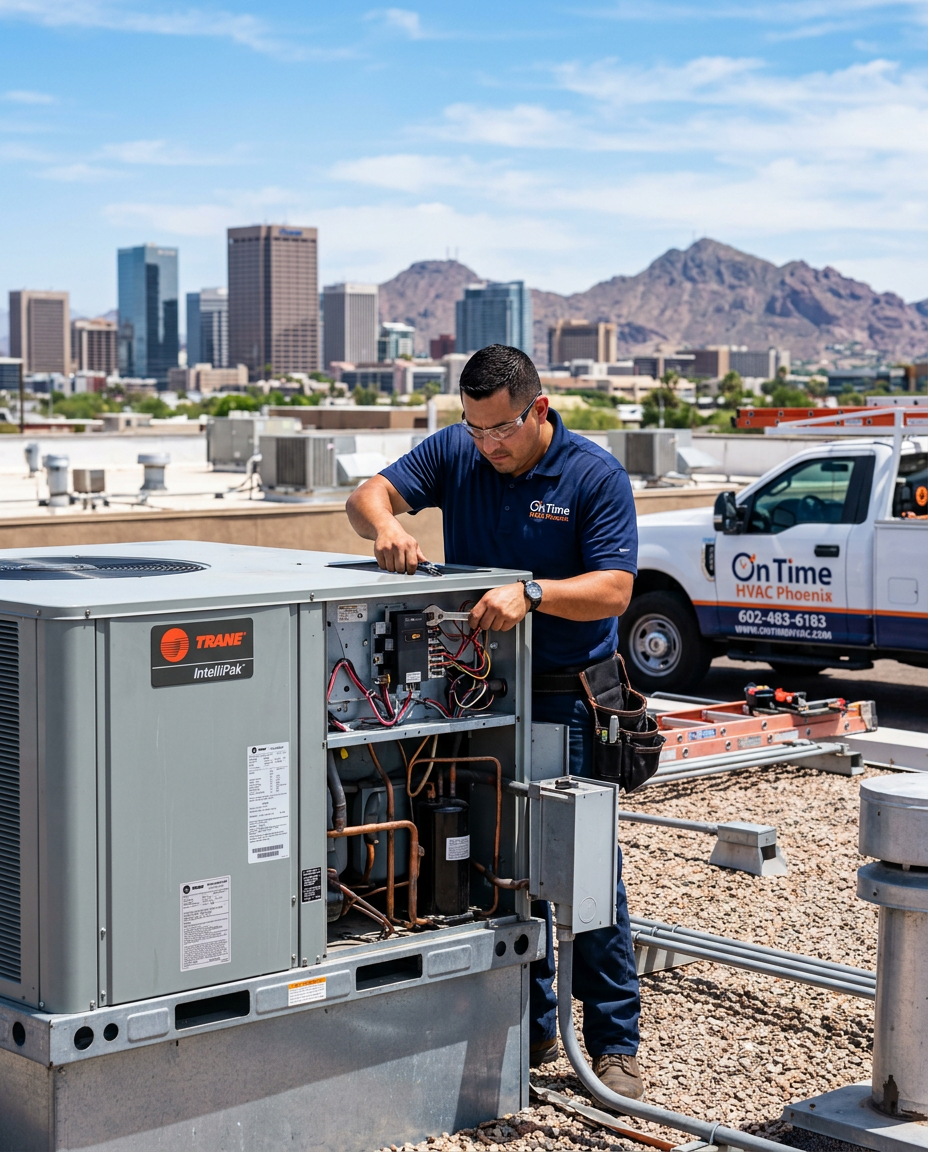 602-483-6183 Commercial HVAC Installation insurance coverage guide
 Documentation You'll Need for a Successful Claim
When filing an insurance claim for HVAC damage or failure, preparation is everything. Gather receipts for any recent professional service calls, maintenance records showing annual tune-ups, photographs of the failed equipment with visible damage, the service technician's diagnosis report, repair quotes from licensed contractors, and your policy documents. We recommend keeping a maintenance log that documents every professional service performed on your system—this becomes invaluable proof that you maintained the equipment responsibly. When our technicians perform annual maintenance or emergency https://ontimehvacphoenix.com/ repairs, we provide detailed documentation that supports insurance claims. Include the date of failure, description of symptoms before failure, weather conditions at the time, and any emergency actions taken. Your insurance adjuster will scrutinize whether preventive care was performed, so these records become your strongest defense against coverage denial.
Working Effectively with Insurance Adjusters
Once you've submitted a claim, an insurance adjuster will inspect your system and review your documentation. We can assist by providing technical reports that explain what caused the failure and whether it qualifies as sudden damage or preventive maintenance neglect. Adjusters appreciate working with licensed HVAC contractors who can speak their language and provide factual, honest assessments. When meeting with your adjuster, have all documentation organized and ready. Explain the timeline of events clearly—when you first noticed the problem, what symptoms appeared, and when the system completely failed. If your system experienced a refrigerant leak due to a manufacturing defect or corrosion from Arizona's hard water, this is sudden damage. If the leak resulted from ignoring seasonal maintenance for years, it's likely considered neglect. Being professional and organized during the adjuster meeting often results in faster claim approval and higher settlement amounts.
Boiler Maintenance Costs and HVAC System Investment
While Phoenix's desert climate rarely requires boiler systems—which are more common in cold climates—understanding HVAC maintenance investment applies directly to your cooling system protection. Annual professional HVAC maintenance typically costs $150 to $300 per year in the Phoenix area, a relatively modest investment compared to replacement costs. These routine tune-ups include filter changes, refrigerant level checks, capacitor testing, coil cleaning, and electrical connection inspection. For commercial HVAC systems, maintenance plans often run $300 to $500 annually depending on system size and complexity. Compare this to full system replacement, which ranges from $4,000 to $12,000 for residential systems and significantly more for commercial installations. A single emergency service call costs $75 to $150, while emergency repairs like refrigerant recharge run $300 to $600. Insurance companies recognize that business owners who invest in annual maintenance are far less likely to file claims for system failures. Documenting this preventive spending actually strengthens your insurance position and demonstrates responsible property management to your carrier. Our team, backed by 5-star Google reviews from Phoenix business owners, brings this expertise to every engagement.
Preventing Claims Through Proactive Maintenance
The most effective insurance strategy is preventing failures before they happen. We serve Phoenix businesses with thorough maintenance programs specifically designed for the desert climate. During monsoon season (July through September), dust storms and sudden humidity spikes stress cooling systems significantly. Summer heat regularly exceeds 115°F, pushing systems to maximum capacity for nine consecutive months. Scheduling annual maintenance before cooling season allows our technicians to address minor issues before they become insurance-claim situations. We clean condenser coils of desert dust accumulation, verify refrigerant levels comply with EPA Section 608 standards, test capacitors for accuracy, and inspect ductwork for leaks that waste 20 to 30 percent of conditioned air.
Filing Your Claim: Step-by-Step Process
Contact your insurance company immediately after discovering the HVAC failure or damage—most policies have time limits for claim notification. Provide your policy number, detailed description of what happened, and date of discovery. Request a claim number for tracking. Take photographs of the failed equipment and any visible damage. Schedule an inspection with On Time HVAC Phoenix to obtain a professional diagnosis report that can accompany your claim. This report should detail the cause of failure and estimated repair or replacement costs. Submit all documentation to your insurance company within the timeframe specified in your policy. Follow up with your adjuster weekly to check claim status. Most insurers process HVAC damage claims within 10 to 30 days of receiving complete documentation. Being professional and organized, backed by expert assessment from us, significantly improves approval chances and settlement amounts.
What Insurance Won't Cover and Why
Insurance explicitly excludes coverage for maintenance-related failures, normal wear and tear, and damage from lack of care. If your system failed because filters were never changed, drain lines became clogged with debris, or refrigerant levels were never checked, your claim will be denied. Manufacturing defects are usually covered under manufacturer warranty rather than business insurance. Damage from improper installation by unlicensed contractors may void coverage entirely—another reason choosing a licensed, bonded, and insured professional like On Time HVAC Phoenix matters significantly. Before a crisis occurs, review your policy details carefully. Call your insurance agent to clarify what HVAC scenarios your policy covers. We can explain how specific failures would likely be treated by insurers and help you understand your coverage limits.
Visit 26 E Pima St Phoenix for Commercial HVAC Installation services "@context": "https://schema.org", "@type": "LocalBusiness", "name": "On Time HVAC Phoenix", "telephone": "602-483-6183", "address": "@type": "PostalAddress", "streetAddress": "26 E Pima St", "addressLocality": "Phoenix", "addressRegion": "AZ", "postalCode": "85003" , "url": "https://ontimehvacphoenix.com/", "areaServed": "Phoenix", "description": "Professional Commercial HVAC Installation serving Phoenix in Phoenix, AZ.", "sameAs": ["https://www.facebook.com/OnTimeHVACPho/","https://www.instagram.com/ontimehvacpho/","https://www.youtube.com/@OnTimeHVACPho","https://www.linkedin.com/company/ontimehvacpho/","https://x.com/OnTimeHVACPho","https://www.tiktok.com/@ontimehvacpho","https://www.pinterest.com/OnTimeHVACPho/"], "image": "@type": "ImageObject", "url": "https://lh3.googleusercontent.com/d/15F5YvH4KvUwmMcECyW5d58Hp-iVfTHk7", "name": "Commercial HVAC Installation in Phoenix: Insurance Coverage and Claims Guide Service Image", "description": "Image for: What does boiler maintenance cost?", "encodingFormat": "image/png" , "audio": "@type": "AudioObject", "contentUrl": "https://drive.google.com/file/d/1QhbDFQpXS0YlCZM1cIs8IKk4yo1Ec9kc/view", "name": "Commercial HVAC Installation in Phoenix: Insurance Coverage and Claims Guide Expert Audio", "description": "Audio answer to: What does boiler maintenance cost?", "encodingFormat": "audio/wav"